Research Project
Mapping Immune-Vascular Signatures to Characterize BBB Disruption and Tumor Colonization in TNBC Brain Metastasis
- Principal Investigator
- Rodrigues, Shruti
- Research Area(s)
- Ongoing Projects
Abstract
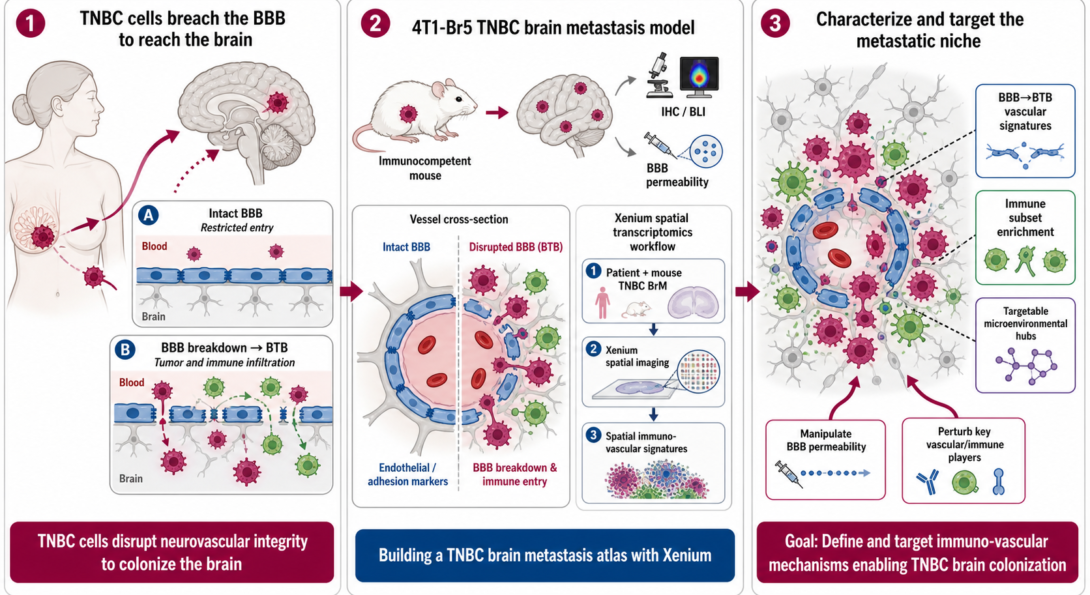
Brain metastases are one of the most difficult challenges in triple-negative breast cancer, and we still don't fully understand why they are so aggressive and resistant to treatment, including immunotherapy. Shruti's PhD research seeks to address that question by examining the tumor microenvironment in patient tissue samples at single-cell resolution, using spatial transcriptomics to map not only which cells are present but also where they are and who they are sitting next to.
A central question driving her work is how the unique immunological landscape of the brain, including blood-brain barrier disruption, microglial responses, and T cell exhaustion, which contributes to the treatment resistance that makes TNBC brain metastases so clinically challenging. The immune landscape there is fundamentally different from that in other tissues, and she thinks that difference matters enormously for how tumors grow and evade treatment. Her work focuses on understanding how immune cells, the blood-brain barrier, and brain-resident cells all interact spatially around the tumor with the longer-term goal of identifying patterns that could eventually guide better treatment strategies for patients.